Are House Extensions Worth It? How to Decide Before You Build
The house is getting tight. Another birthday, another year of kids sharing a room, and another Sunday morning where someone is waiting for the bathroom. You love the suburb, you love the street, but the home just isn't keeping up anymore.
For a lot of Brisbane homeowners, this is the moment the house extension vs moving debate becomes real. It's not a simple question, and the answer is different for everyone.
This guide walks through the real numbers, the honest scenarios where extending makes sense, and the situations where it doesn't. Just the information you need to make a clear-headed decision before you spend money on anything.
Are House Extensions Worth It?
For most Brisbane homeowners who love their location, a well-planned extension is worth it. The financial argument alone is strong. Selling and buying in Queensland means absorbing tens of thousands of dollars in stamp duty, agent fees, and moving costs before you've added a single room. Extending keeps that money in your assets rather than handing it to the state government and a real estate agent.
That said, whether it's worth extending your house comes down to your property, your suburb's market ceiling, and what you're actually trying to solve. An extension that adds two bedrooms to a Queenslander in Paddington or Ascot will almost always recover its cost and then some. An extension on a property in an area where values are capped well below the cost of building is a different calculation entirely.
As a Brisbane-based building team with more than 20 years of experience,
Alps Constructions helps homeowners weigh this decision with clarity from the very beginning. Understanding whether an extension is the right move early on can save time, reduce unnecessary costs, and make the entire process far less stressful.
Selling vs House Extension vs Moving: The Real Cost Comparison
Most homeowners searching for this question are quietly doing a comparison in their heads: is it cheaper to extend the home I have or find a bigger one somewhere else? The honest answer is that moving carries more hidden costs than most people factor in.
Here is what you're actually paying when you sell and buy in Queensland, based on Queensland Government transfer duty rates and current market estimates:
| Cost | Extending | Selling and Buying |
|---|---|---|
| Queensland stamp duty (on a $900k purchase) | $0 | ~$26,350 |
| Real estate agent fees (2–3% of sale price) | $0 | $16,000–$24,000 |
| Legal and conveyancing (both sides) | $0 | $2,000–$4,000 |
| Removalists and temporary accommodation | $0 | $3,000–$10,000+ |
| Renovations needed in the new home | $0 | Often $20,000–$80,000 |
| Total transaction costs | $0 | $67,350–$136,350+ |
Sources: https://www.feasly.com.au/guides/stamp-duty-calculator-qld or the official QRO rates page at https://qro.qld.gov.au/duties/transfer-duty/calculate/rates/
Those transaction costs don't buy you a single extra square metre. They simply move you from one property to another. An extension keeps that money working inside the asset you already own.
That said, extensions carry their own significant upfront costs, and there are scenarios where moving is genuinely the smarter move. This isn't an argument for extending at all costs. It's a prompt to make sure the full cost of moving is on the table before you decide.
When a House Extension Is Worth It
Three clear signals extending make more sense than selling out and starting over.
You Love the Suburb and the School Zone
In Brisbane's inner and middle-ring suburbs, good school zones and established communities are genuinely hard to replace. The commute you've refined over the years, the neighbours you actually know, and the walk to the café on Saturday morning. These things have real value and a real cost to rebuild.
When homeowners do the sums on a move, they often discover that the bigger home they need is either in a suburb they like less or in the same suburb but at a price point that absorbs any financial gain. Staying and extending keeps the life you've built intact.
Your Property Has Room to Move
Block size, orientation, and the existing footprint determine what's possible. Brisbane's post-war housing stock on 600 to 800 square metre blocks often has genuine scope to extend outward, upward, or under, depending on the structure and the site.
A Queenslander on a sloped block can offer strong build-under potential. A single-storey brick home on a flat block with a generous rear yard is a good candidate for a rear ground-floor addition. A well-built home on a tight inner-city block might suit a second storey. A builder who knows the city's housing types can usually tell you within a single site visit what your block and structure can realistically accommodate.
The Extension Will Suit the Property's Market Ceiling
Overcapitalising means spending more on an extension than the property's market value can absorb. A $250,000 extension on a home in a street where properties sell for $750,000 is a bad investment if comparable renovated homes in that street are selling for $850,000. The market won't reward you for it.
The extension should lift the
home's value without pushing it above what the suburb supports. Whole-home renovations and extensions in Brisbane's inner suburbs and the Queenslander belt tend to deliver strong returns because the underlying land value is high and buyers in those areas expect quality homes. A preliminary property valuation or a quick conversation with a local agent before scoping the project is a smart first step in working out whether it's worth extending your house on that specific street.
Alps Constructions always advises clients to understand the price ceiling in their area before scoping an extension. Getting a preliminary property valuation or speaking to a local agent is something we walk clients through as part of our early consultation process, because the numbers need to make sense before the drawings start.
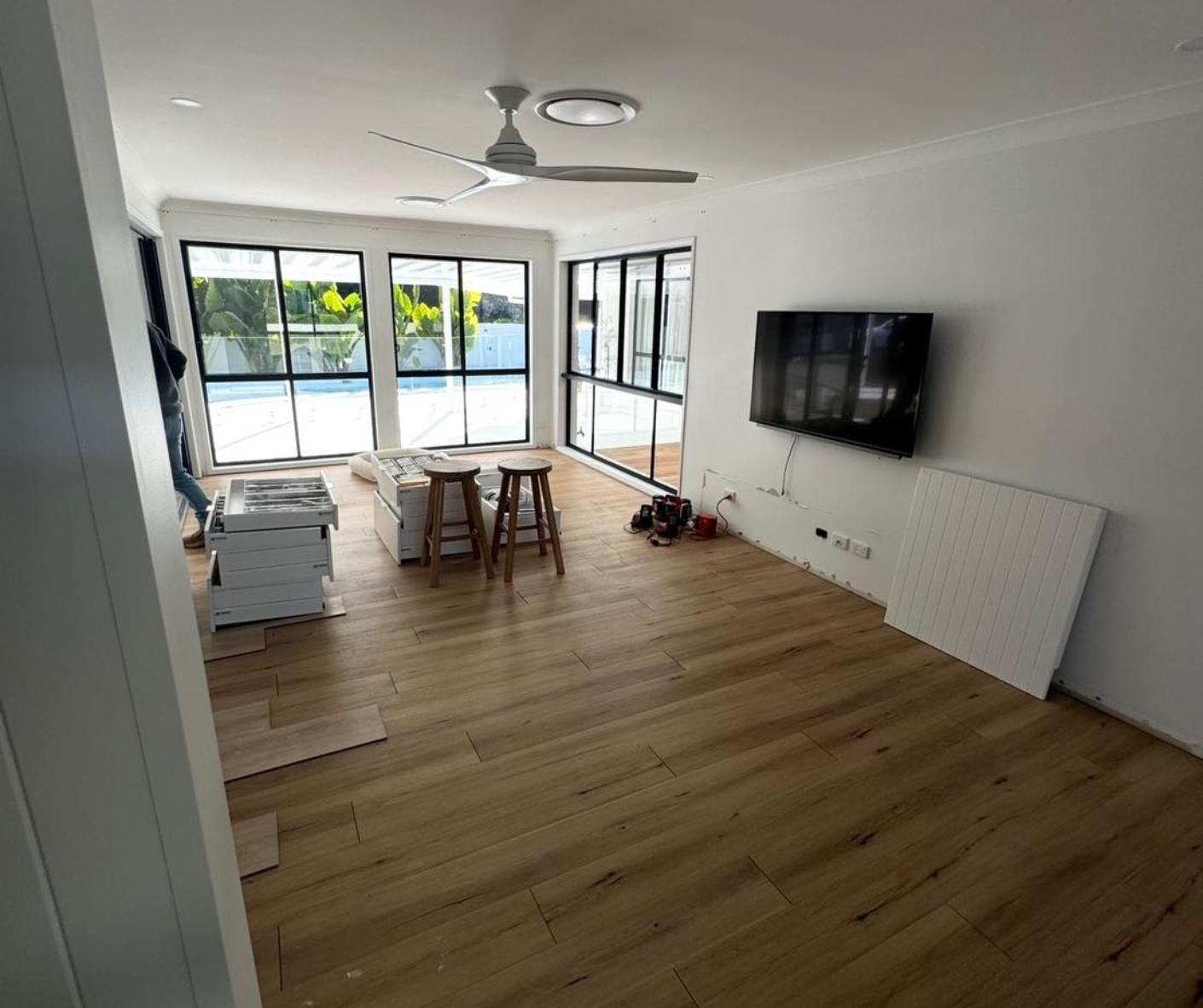
When a House Extension is NOT Worth It
This is the section most builder websites skip. We don't, because the honest answer builds more trust than a sales pitch ever will.
Extending is unlikely to be the right call in these situations:
- You actually need a different suburb. A lifestyle change, a job relocation, or a genuine desire to be somewhere new is a real reason to move. No extension solves that.
- The property has structural or site constraints that make extending prohibitively expensive. Small blocks, poor site access, heritage overlays, and certain types of foundations can make an extension cost far more than it's worth.
- The area's property values are too low for the extension cost to be recovered. Some suburbs simply don't support the spending.
- Council controls have been reached. If the block is already at maximum site coverage or the council overlay restricts further works, the scope may not be achievable regardless of the budget.
- The homeowner is trying to solve a problem that a different property already solves. Sometimes the most cost-effective answer really is to find a home that already has what's needed.
Alps Constructions will tell you this directly if we see it in your situation. The builder who walks away from a job that isn't right for the client is the builder that the client recommends to everyone they know.
Which Type of Extension Is Right for Your Brisbane Home?
Three approaches to adding space and how to match the right one to your block, your structure, and your budget.
Extending Out (Rear or Side Ground-Floor Extension)
This is the most common choice for Brisbane homes with remaining block space. A rear or side extension suits single-storey homes on larger suburban blocks and works well for open-plan living additions, new bedrooms, or kitchen expansions.
Disruption during the build is moderate, and families can often remain in part of the home while work progresses. Generally, extending outward costs less per square metre than going up or down, which makes it the starting point for most conversations about adding space.
Going Up (Second-Storey Addition)
Second-storey additions suit homes with limited land but solid foundations. They’re common in Brisbane’s inner-ring suburbs, where space is tight, and extra bedrooms are needed. Costs are higher than ground-floor extensions, and an engineering assessment is required first, but the payoff can be strong through added space and market value. Check council rules early, especially for character overlay properties.
Going Under (House Raise and Build Under)
House raising and building under is especially suited to Queenslanders and post-war homes on stumps. By lifting the existing house, homeowners can create a new lower level and nearly double usable space without extending boundaries. It’s ideal for flood-prone or sloped inner-city blocks, and QRIDA-funded raises may improve the financial case for eligible flood-affected properties.
What Does a House Extension Actually Cost in Brisbane?
Cost is the question everyone arrives with, and the honest answer is: it varies significantly. Here are the rough, indicative ranges Brisbane builders typically work within. Keep in mind these are guides only, and your project will depend on scope, design, site, and finishes:
- Ground-floor rear or side extension: Generally, the most affordable option per square metre, suited to homes with available land and a straightforward structural connection to the existing building
- Second-storey addition: More complex structurally and typically more expensive, given the engineering requirements and the need to assess the existing slab and footings before work can begin
- House raise and build under: Highly variable depending on the raise height, the extent of the build-under fit-out, and whether flood engineering is involved
These figures do not include the costs that catch homeowners off guard:
- Design, drafting, and architectural drawings
- Structural engineering reports
- Certifier and council approval fees
- Soil testing (required for foundations)
- Temporary accommodation if the home is uninhabitable during the build
Alps Constructions works on a cost-plus model for the majority of projects. Rather than wrapping contingency into a padded fixed-price contract, cost-plus means homeowners pay for the actual cost of labour and materials plus a transparent builder's margin. For complex extensions involving existing structures, this model tends to be more honest and more flexible.
This is paragraph text. Click it or hit the Manage Text button to change the font, color, size, format, and more. To set up site-wide paragraph and title styles, go to Site Theme.
There are a handful of things homeowners can do before committing to anything that materially improve the outcome:
Get Early Builder Advice Before Spending on Design
A paid site visit with an experienced builder costs a fraction of a set of architects’ drawings. It will tell you what's achievable on your block, what the council overlay permits, and whether the concept you have in mind is structurally and financially realistic. Discovering a problem at this stage costs very little. Discovering it after you've paid for plans costs a lot.
Understand Your Block's Constraints First
Council overlays, flood zones, character restrictions, setback rules, and maximum site coverage all limit what can be built. These constraints are fixed. Knowing them before you scope the project means the design is built around reality rather than having to be scaled back later.
Match the Extension Scope to the Suburb's Price Ceiling
The wish list and the budget ceiling need to align with what the market will support. A $500,000 extension in a suburb where renovated homes sell for $800,000 is hard to justify. The same extension in a suburb where comparable homes sell for $2M is a different story.
Choose a Builder Who Uses a Transparent Contract Model
Whether cost-plus or a clearly itemised fixed-price estimate, you need to be able to see where the money is going. Contracts that bundle everything into a lump sum with no breakdown make it impossible to compare quotes or understand where costs are concentrated.
Build in a Contingency of 10 to 15%
Extensions and renovations involving existing structures always carry more unknowns than new builds. Water damage behind walls, unexpected footings, and outdated wiring are common examples. A contingency budget absorbs them without derailing the project.
Ready to Build Something Better? Start the Conversation with Alps Constructions
A house extension is worth it when the decision is made with clear information, the right property, and the right builder. For most Brisbane homeowners who love where they live, extending is the more financially sound path compared to selling and buying. It's not the right call for everyone, but for those who are a good fit, the outcome is a home that genuinely works for the life being lived in it.
Alps Constructions specialises in home renovations, house extensions, and house raising across Brisbane. If you're weighing up your options, we can help you work through the numbers before you commit to anything.
Get in touch with our team today.
Key Takeaways
- For most Brisbane homeowners who love their suburb, extending is worth more than moving once stamp duty, agent fees, and moving costs are properly factored in, with transaction costs alone reaching $70,000 to $148,000 or more.
- The right type of extension depends on block size, existing structure, and local council overlays: extending out suits homes with land, going up suits tight inner-city blocks, and going under is uniquely suited to Queensland's Queenslander and stump-home stock.
- Overcapitalising is the biggest financial risk, and the extension scope and cost should align with what the suburb's market will support.
- A house extension is NOT the right call for every situation: some homeowners genuinely need a different suburb, a different property type, or have a block with constraints that make extending impractical.
- Getting early builder advice before spending money on design is the single most cost-effective step a homeowner can take.
- In Brisbane's flood-affected areas and for homes on stumps, a build under can be the most cost-effective way to nearly double a home's footprint while also improving flood resilience.
Frequently Asked Questions About House Extensions
Are house extensions worth it in Brisbane?
Yes, for most homeowners who want to stay in their suburb and have a property with scope to extend. The decision becomes much clearer when the full cost of moving is properly counted. Queensland stamp duty, agent fees, legal costs, and the renovation budget you'll likely need in the new home all add up to a number that surprises most people. When that total is weighed against the cost of extending in place, extending often comes out ahead on pure financials, let alone the lifestyle factors.
Is it cheaper to extend or sell and buy in Queensland?
In most cases, extending avoids the significant transaction costs of selling and buying. Queensland stamp duty alone can add $20,000 to $40,000 or more to the cost of a new purchase, and that's before agent fees, legal costs, and moving expenses. However, extension costs vary significantly by type and scope, so a direct comparison depends on your specific property and what it can realistically accommodate.
What types of house extensions are available in Brisbane?
Brisbane homeowners can extend out (rear or side ground-floor addition), up (second-storey addition), or under (house raise and build under). The right choice depends on block size, existing structure, flood zone status, and council overlays. Many Brisbane homes, particularly older post-war and Queenslander properties, suit more than one approach, which is worth exploring with a builder before committing to a direction.
How much does a house extension cost in Brisbane?
Costs vary widely depending on the type and scale of the extension, design complexity, site access, and finishes. As a general guide, ground-floor extensions are typically less expensive per square metre than second-storey additions or build unders. Hidden costs, including drafting, engineering, certification, and council fees, can also add $15,000 to $50,000+ to the total. A builder consultation is the most reliable way to get a realistic cost range for your specific property.
What is overcapitalising and how do I avoid it?
Overcapitalising means spending more on an extension than the property's market value can recover. To avoid it, research the price ceiling in your suburb before scoping the project. Look at what fully renovated comparable homes are selling for, and make sure your extension scope keeps the total spend inside that range. A preliminary property valuation or a conversation with a local agent is a practical first step.
How do I know if my house is suitable for an extension?
Key factors include block size and shape, the existing structural condition of the home, council overlays (character, heritage, flood), and local planning controls, including setbacks and maximum site coverage. A builder site visit or early consultation can identify what's achievable before you spend money on design. For Brisbane's post-war homes and Queenslanders, the structural condition of the stumps or slab is often the most important factor to assess early.
Do house extensions add value to a property?
Well-planned extensions in Brisbane's established suburbs typically add strong value, particularly those that add bedrooms, bathrooms, or open-plan living. The value uplift depends on the quality of the build, the type of extension, and the area's market ceiling. Extensions in high-value inner suburbs tend to deliver the strongest returns because the underlying land value supports higher finished home prices.
How long does a house extension take from decision to completion?
The full process, from initial consultation through design, council approvals, and construction, typically takes between 6 and 18 months, depending on the scope and complexity of the project. Simpler extensions that don't require council approval can move faster. Projects involving engineering reports, character overlay assessments, or significant structural work take longer at the planning stage.
What is a cost-plus building contract, and why does it matter for extensions?
A cost-plus contract means you pay the actual cost of labour and materials plus a transparent builder's margin, rather than a fixed-price contract where contingency costs are often factored in invisibly. For complex extensions involving existing structures, where unknowns are common, a cost-plus model is often the more honest and flexible model. It also makes it easier for homeowners to understand where their money is going and to make informed decisions when variations arise.
When should I NOT extend my home?
Extending is unlikely to be worth it if you need a completely different suburb or lifestyle setting, if the property has structural or site constraints that make extension prohibitively expensive, if the area's property values are too low for the extension cost to be recovered, or if the home is already at its council-permitted maximum site coverage. A builder who is honest about these scenarios before any money changes hands is worth far more than one who will quote on anything.