Small Bathroom Vanity Ideas: Space-Saving Styles & Tips
The bathroom is small, always messy, and has nowhere to put anything. It is your layout that is failing, not you.
This guide shares quick, practical vanity ideas for a small bathroom - better sizing, smarter storage, brighter lighting, and finishes that look planned for the space.
You’ll learn which vanity types work best, how to measure properly, which basin and tap pairings save space, and where to spend or save.
Quick-Start Checklist: Measure First, Buy Smarter
Measure first so you buy a vanity that fits the room, not just the website photo. Ten minutes with a tape measure now saves you weeks of daily frustration later.
Spend 10 Minutes Reviewing Your “Non-Negotiables.”
Measure the vanity zone for width, depth, and door swing, then do a quick walking space check so you know the room will still feel easy to move through. Finish by using painter’s tape on the floor and wall to map the vanity footprint so you can see the size in real life before you buy.
Sizing Guide (Set Expectations):
Compact vanities are typically 60–90 cm wide and 45–60 cm deep, but your layout is ultimately what matters. In tight rooms, aim for a slimmer width where needed and consider under 400 mm depth to keep the walkway and door swing comfortable.
Small Space Vanity Types That Actually Work
Be inspired by small bathroom vanity ideas that keep the room open and fit your daily routine. Start with your layout, then choose a small-space vanity type that suits it.
Wall-Hung (Floating) Vanities
A floating vanity shows more floor, so the room feels lighter, looks bigger, and is easier to clean. Add hidden under-vanity LED lighting for a crisp “floating” look that also works as a soft night light in an ensuite.
Freestanding Vanities (Including Repurposed Furniture)
Freestanding vanities are a flexible option for quick refreshes, and they suit older homes with a bit of character. A second-hand or vintage piece can work well too, as long as it’s properly sealed and plumbed to handle bathroom moisture.
Corner/L-Shaped/Slimline Vanities for Awkward Layouts
Corner and L-shaped vanities make use of dead space, while slimline units suit narrow alcoves and small powder rooms. Pair them with wall-mounted tapware to free up benchtop space, and use a licensed plumber if any pipework needs moving.
Vanity Ideas for Small Bathrooms: Storage and Layout Wins (Without Bulky Cabinets)
Smart storage beats a bigger vanity every time in a small bathroom. With the right small bathroom vanity ideas, you can skip bulky cabinets and keep the benchtop clear.
Choose Drawers and Internal Organisers
Drawers make it easier to see what you have, so you stop digging and dumping. Add dividers or organisers so toothbrushes, skincare, and hair tools stay sorted instead of taking over the benchtop.
Go Vertical (so the floor stays clear)
Use wall space to add storage without shrinking the room, like a tall cabinet that fits. Shaving cabinets or recessed mirror cabinets add hidden storage, and wall niches or a slim shelf beside the vanity cut clutter without bulky cabinetry.
Reduce Bench Clutter With Smarter Tap and Shelf Decisions
Small bathrooms get messy fast because there is nowhere for the everyday stuff to go. The fix is simple: make storage easier to use and keep surfaces clear.
Sink and Tap Pairings That Make a Small Vanity Feel Bigger
A small vanity feels bigger when the basin and taps stop stealing bench space. For small vanity bathroom ideas that actually work, pick a combo that keeps the top clear and the storage working.
Pick a Compact Basin That Suits Your Benchtop and Storage Goals
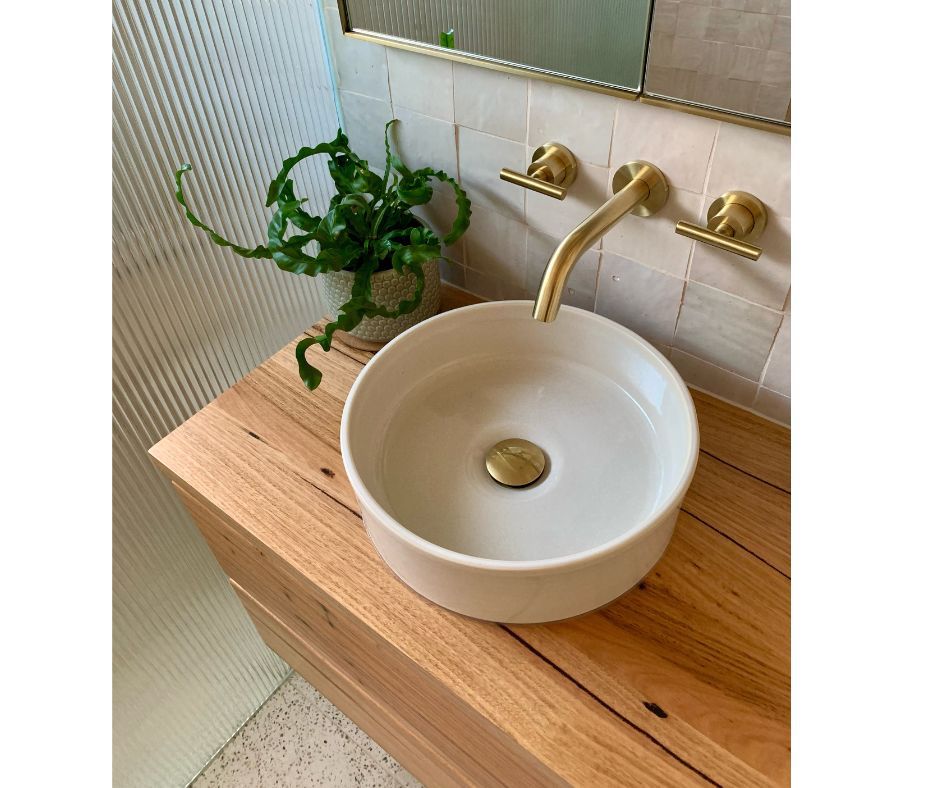
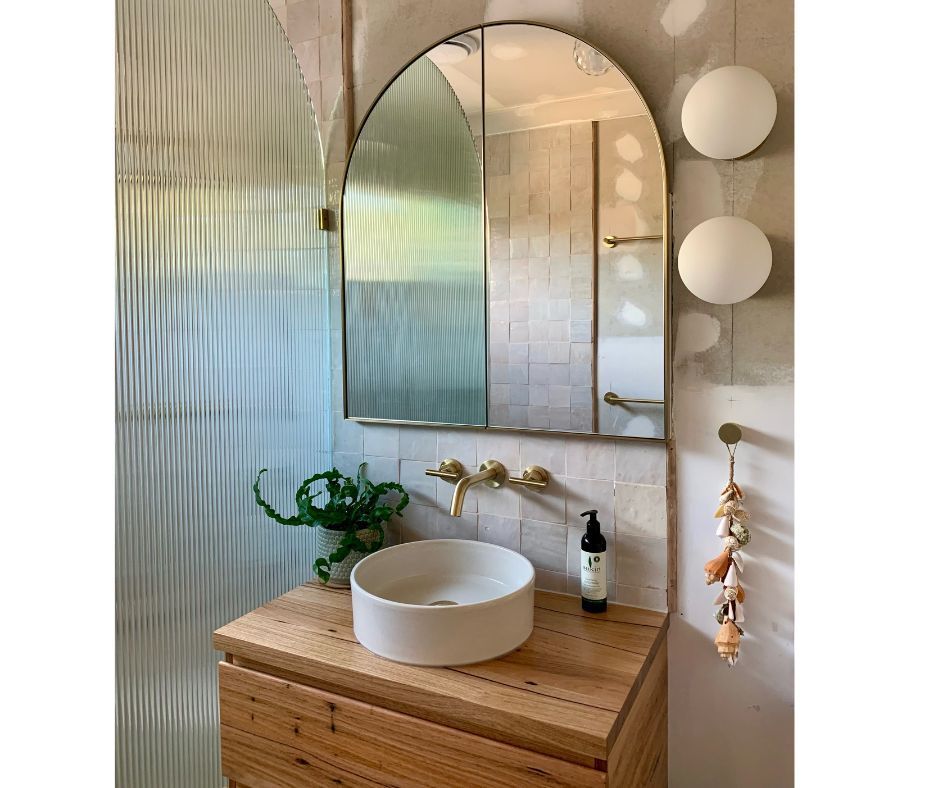
Overmount basins work well on smaller benchtops and repurposed freestanding vanities because the installation is simpler. Pair them with wall mixer taps to cut clutter and win back bench space.
Fixture Choices That “Buy Back” Space
Wall-mounted tapware can make narrow and corner vanities feel less cramped because the benchtop stays clearer. In Australia, wall-mounted tapware should comply with AS/NZS 3500, so use a licensed plumber and plan it before you buy.
Materials and Finishes That Add Warmth (and Don’t Overwhelm the Room)
Warm finishes make a small bathroom feel welcoming, not clinical. The trick is choosing texture and colour that add character without making the space feel busy.
Go Bold (Strategically) With Colour or Texture
A dark vanity can look crisp and intentional in a small bathroom when the walls and lighting keep it balanced. Add texture with fluted fronts or timber looks, then finish with gunmetal or brushed brass hardware for a clean upgrade.
Choose Materials That Cope With Humidity (Especially Coastal/Tropical Zones)
In steamy bathrooms, pick moisture-resistant cabinetry cores and make sure any timber surfaces are properly sealed and resealed as needed. If the room gets strong sun, choose UV-resistant laminates and avoid finishes that are known to soften or mark under heat.
Lighting Tricks That Make the Vanity Zone Look Twice as Big
Bad lighting makes even a nice vanity look cramped and dull. Good lighting makes the whole room feel bigger, cleaner, and easier to use.
Add Light Where Shadows Normally Hit
Add under-cabinet or under-vanity LED strips to soften harsh shadows and give the vanity a lighter, floating look. For mirrors, choose a recessed mirror cabinet for hidden storage, or go with a large frameless mirror to bounce light and visually open the room.
In a powder room, an oversized mirror lifts the whole wall and makes the space feel taller. Pair it with vertical wall sconce lights to add height and brightness right where you need it.
When to Go Custom (and When to Stick With Standard Sizes)
Custom sounds fancy, but it is not always necessary. The best choice depends on your layout, your plumbing position, and how much storage you actually need.
Custom is worth it if…
Go custom if you have tricky corners, tight recesses, or off-centre plumbing that standard sizes cannot handle neatly. It is also worth it when you want tailored storage like pull-out trays or hidden bins.
Standard is fine if…
Standard works when your layout is simple, and you pick a smart style like floating, slimline, or corner. You can still get a high-end result by upgrading storage and keeping the benchtop clear.
Budget Guidance: What Homeowners Can Expect to Spend
Vanity pricing can jump fast, even when the bathroom is tiny. Set a budget early so you can choose where to spend and where to keep it simple.
Typical Price Ranges (Use as a Guide)
As a benchmark, 900 mm and under vanities typically sit in the $799.90 to $1,299.90 range, depending on brand and materials:
Treat this as a guide, then compare inclusions like benchtop, basin, and hardware so you are not caught by “extras” later.
If you want a lower-cost option, a second-hand or vintage furniture conversion can work well. Just allow for sealing, a suitable top, and plumbing costs so the bargain stays a bargain.
Common Mistakes to Avoid in a Small Bathroom Vanity Upgrade
Buying without taping out the footprint first. A vanity can look slim online, then swallow the room once it’s installed. Use painter’s tape to mark the size on the floor and wall so you know it will suit your walkway and door swing.
Choosing fixtures that add clutter. Bulky mixers and crowded benchtops make small bathrooms feel messy fast. For ideas that actually clear space, consider wall-mounted tapware if your layout allows, and make cleaning easier too.
Ignoring vertical storage. When you skip shaving cabinets, recessed mirror cabinets, or simple shelves, everything ends up living on the benchtop. Use wall space to keep daily items close, but out of sight.
Get Your Vanity Plan Right With Alps Constructions
Alps Constructions helps homeowners plan practical upgrades that suit everyday routines. We handle kitchen renovation, bathroom renovation, and additions and extensions.
A small bathroom works better when the key elements are planned together, not treated as separate add-ons. The layout should suit the room size, the vanity should offer practical storage, the basin and tapware should save space without feeling cramped, and the lighting and fixtures should tie everything together in a simple, functional way.
Contact us for help with your bathroom renovation, and grab our small bathroom planning checklist to measure and buy with confidence.
Key Takeaways
Tape out the vanity footprint before you buy, so you protect the walkway and door swing. It’s one of the simplest small vanity bathroom ideas that stops costly sizing mistakes.
Floating vanities can make the room feel bigger and suit under-vanity lighting. Slimline and corner vanities, including under 400 mm deep, can fix awkward layouts, and wall-mounted tapware can help keep the benchtop clear.
Use vertical storage like shaving cabinets, recessed mirror cabinets, and niches to cut clutter. Add style with fluted fronts and simple hardware, like gunmetal or brushed brass.
FAQs
1. What’s the best vanity size for a small bathroom or ensuite?
- Choose the largest vanity that still leaves a comfortable walking space and a clear door swing. Standard compact widths often work well, but your layout matters more than the number.
2. How deep should a vanity be in a small bathroom (and what’s “too deep”)?
- A shallow vanity (often around 400–500 mm deep) usually feels best in tight rooms. It’s “too deep” if it narrows the walkway, clips door movement, or makes the space feel boxed in.
3. Are floating vanities practical for everyday family bathrooms?
- Yes. Floating vanities are easy to clean under and can make the room feel more open. Just make sure it’s properly wall-fixed and has enough storage for daily use.
4. What storage add-ons make the biggest difference in a small bathroom?
- A mirrored shaving cabinet adds hidden storage without taking up floor space. Drawer organisers and pull-out trays keep essentials tidy and reduce benchtop clutter.
5. Are shaving cabinets or recessed mirror cabinets worth it?
- Yes. They’re one of the best “small bathroom” upgrades because they add storage where you already need a mirror. Recessed versions feel even sleeker if your wall cavity allows it.
6. Do wall-mounted taps really save space, and what should I know before installing them?
- They can free up benchtop space and make cleaning easier around the basin. Installation needs careful planning and should be done by a licensed plumber, especially if plumbing is moving.
7. What sink type is best for a compact vanity (overmount vs inset)?
- Overmount basins are often easier to install and can suit smaller benchtops. Inset options look streamlined but may reduce internal drawer space depending on the cabinet design.
8. Are corner or L-shaped vanities a good idea for awkward bathrooms?
- Yes. They’re great for using dead corners and improving flow in tricky layouts. They work best when the plumbing position and door swings are planned early.
9. What finishes work best in humid bathrooms (especially coastal areas)?
- Choose moisture-resistant cabinetry, durable laminates, and well-sealed surfaces that handle steam and splashes. Avoid unsealed timber and poorly sealed edges that can swell over time.
10. When does a custom vanity make more sense than a standard size?
- Go custom when you have awkward dimensions, off-centre plumbing, or very specific storage needs. Standard sizes are usually fine if the layout is straightforward and you’re keeping plumbing in place.